
Global investment in data centres could reach $6.7 trillion by 2030, with the majority driven by AI demand: experts discussed Kazakhstan’s оpportunities

By 2030, approximately $6.7 trillion in capital expenditure will be required for data centres to meet the growing global demand for computing power. Of this amount, around $5.2 trillion is expected to be invested in data centres designed to support artificial intelligence workloads, while a further $1.5 trillion will be allocated to infrastructure for traditional IT applications. At the same time, global corporate investment in artificial intelligence reached approximately $582 billion in 2025, increasing by 130% year-on-year. Demand for data centre capacity is also projected to nearly triple by 2030, with around 70% of that demand coming from AI workloads.
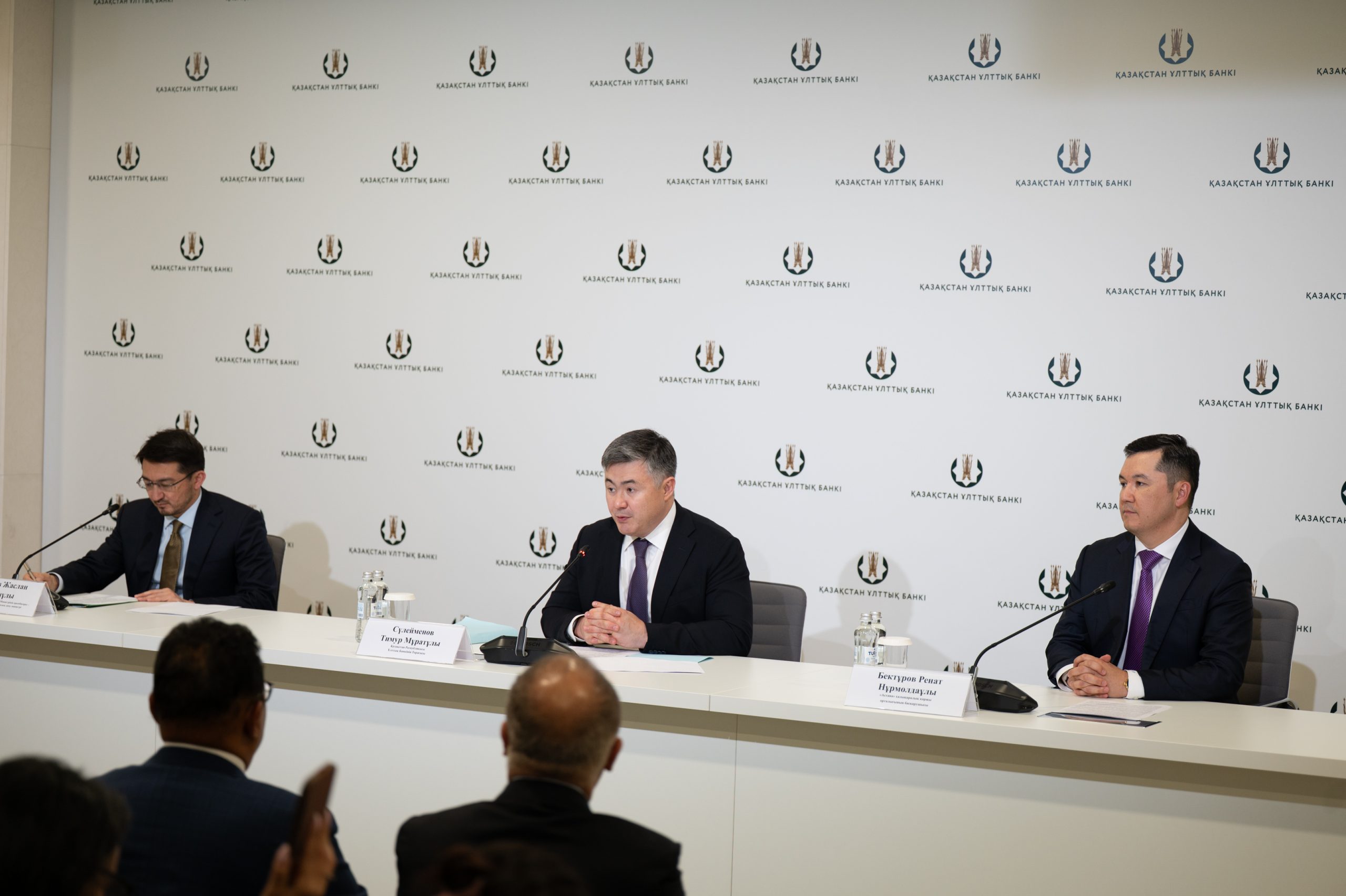
These findings were presented in the AIFC Insights report “AI as Infrastructure: Capital, Compute and Investment Opportunities”, which was discussed on 10 June at the Astana International Financial Centre (AIFC).

The event brought together experts in artificial intelligence, digital infrastructure, investment, cybersecurity and public policy. Participants included representatives of the World Bank, the Administration of the President of the Republic of Kazakhstan, the Digital Government Support Center, Nazarbayev University, AI Association, AKASHI Data Center, Presight, MOST Ventures, Quantum Capital, Axiom Capital, TSARKA and other organisations.
According to the experts, artificial intelligence is becoming not only a technological trend but also a major infrastructure and investment theme. As a result, countries are increasingly competing not only in the development of AI solutions, but also in attracting computing capacity, data centres and cloud infrastructure.
Zhanbolat Kakishev, Chief Product Officer of the AIFC Authority, noted:
“Today, competition in the field of artificial intelligence is increasingly shifting from technology itself towards computing power, energy and capital. In this environment, it is important to clearly identify the segments where Kazakhstan has the greatest potential and can establish a sustainable competitive position.
Given the capital-intensive nature of the industry and the continuing uncertainty surrounding the evolution of AI models, infrastructure appears to be one of the most promising areas. Kazakhstan and the broader region possess a number of advantages, including access to energy resources, a favourable geographic location and suitable climatic conditions, provided that existing infrastructure constraints are addressed.
We see the role of the AIFC as facilitating investment attraction and creating a favourable environment for the implementation of such projects.”
Participants discussed the role Kazakhstan could play in the emerging AI infrastructure value chain. According to experts, the country’s most realistic opportunity lies in developing the infrastructure layer of artificial intelligence, including data centres, GPU clusters, cloud platforms, data storage infrastructure, energy solutions and regulated AI services. One of the key initiatives in this area is the “Data Centre Valley” project based on the Ekibastuz energy hub, with plans to expand energy infrastructure to 1 GW and attract an estimated $30 billion in investment.
The discussion highlighted that Kazakhstan already possesses a number of competitive advantages for the development of AI infrastructure. These include its strategic geographic location, energy resources, a growing data centre market, local AI development capabilities, existing computing capacity and an emerging regulatory framework for artificial intelligence. In addition, 2026 has been declared the Year of Artificial Intelligence in Kazakhstan, underlining the country’s commitment to digital transformation. On 9 June, the Head of State signed the Decree approving the National Strategy for Large-Scale Digitalisation and the Widespread Adoption of Artificial Intelligence Technologies “Digital Qazaqstan” through 2029, establishing a long-term technological roadmap for the country.
At the same time, participants discussed key challenges related to the development of AI infrastructure, including access to energy capacity, network connectivity, the creation of sustainable commercial demand, data governance issues and the attraction of long-term capital.
Special attention was also given to financing mechanisms for AI infrastructure projects. Experts reviewed international approaches to structuring investments in data centres, computing capacity and cloud solutions, while also discussing the role of financial instruments in creating a new asset class of infrastructure investments. Potential financing mechanisms highlighted during the discussion included project finance, private credit, specialised investment funds, equipment leasing, Islamic finance and capital market instruments.
Commenting on the preparation of the AIFC Insights report, Vadim Bogdanov, Strategy and ESG Director at AKASHI Data Center, said:
“Today, information is accessible to almost everyone, and much of the available data can be found through open sources or collected using artificial intelligence tools. However, the true value of studies like this lies in expert validation and local context. This report is particularly valuable because its conclusions are based on the views of industry professionals and take into account Kazakhstan’s specific circumstances. That is what distinguishes it from information that can be obtained independently.”
Amina Baikenova, Deputy Director for Products and External Relations at ISSAI (Institute of Smart Systems and Artificial Intelligence), Nazarbayev University, added:
“Kazakhstan is already developing a strong research base and creating its own artificial intelligence solutions. At the same time, one of the key challenges remains the transition from successful research and development projects to large-scale adoption in the real economy.
For artificial intelligence to become a true driver of economic growth, it is essential to ensure access to computing power and create the necessary infrastructure. In this context, the report is particularly timely, as it provides a foundation for dialogue between developers, investors and policymakers while supporting the search for effective financing mechanisms for AI infrastructure projects.”
The discussion also explored the potential role of the AIFC in the development of AI infrastructure. Participants noted that the AIFC’s ecosystem — including common law, capital market development tools through the Astana International Exchange (AIX), transaction structuring mechanisms, investment funds, and sustainable and Islamic finance instruments — could facilitate capital mobilisation for next-generation digital infrastructure projects. For example, KT-Telecom’s USD-denominated bonds are already listed on AIX, demonstrating the potential of debt financing for infrastructure development.
The roundtable served as a platform for expert discussion and the collection of practical feedback for the finalisation of the AIFC Insights report. The recommendations received will be incorporated into the final study, which focuses on the future development of AI infrastructure and investment opportunities in Kazakhstan amid growing global demand for computing power and digital infrastructure.
Reference:
The Astana International Financial Centre (AIFC) is an independent jurisdiction where investors and business meet emerging opportunities of Kazakhstan and Central Asia in a transparent and sustainable environment backed by the principles of English Common Law. www.aifc.kz
AIFC Press Office,
Ainur Issabayeva, press secretary
E-mail: [email protected]